
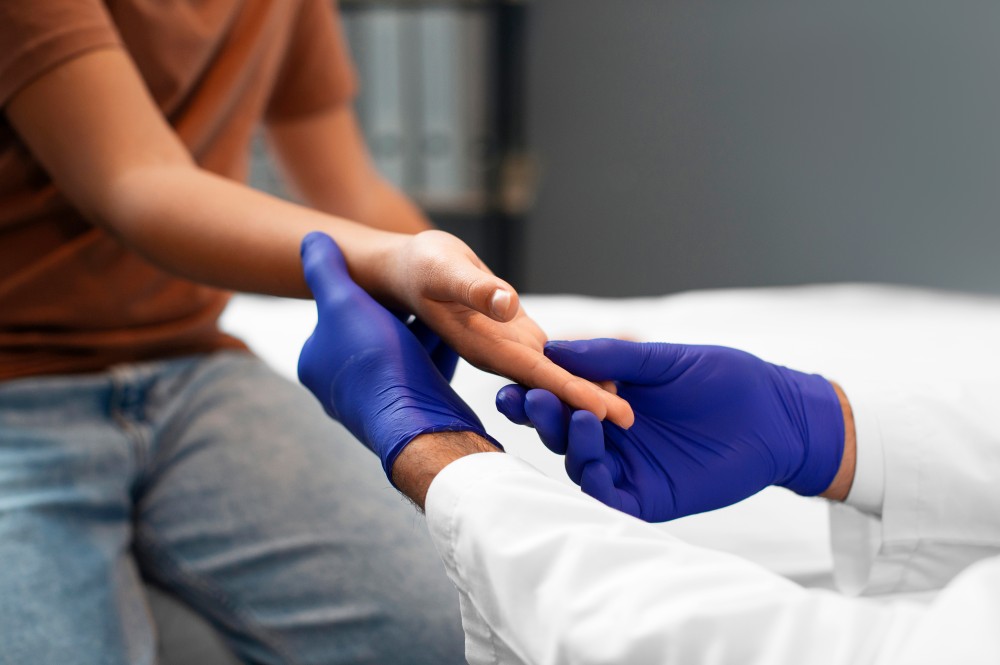
Trigger finger is a common condition that affects the tendons in your fingers or thumb, making it difficult to bend or straighten them smoothly. The affected finger may catch, lock, or suddenly snap into place, causing pain and discomfort during everyday activities. Whether you’re typing, gripping tools, cooking, or simply holding a cup of coffee, trigger finger can interfere with your daily routine and reduce hand function.
Fortunately, trigger finger treatment has advanced significantly, with both non-surgical and surgical options available depending on the severity of the condition. At Ortho X Press, our orthopedic specialists provide comprehensive evaluations and personalized treatment plans to help patients regain hand mobility and improve their quality of life.
What Is Trigger Finger?
Trigger finger, medically known as stenosing tenosynovitis, occurs when inflammation narrows the protective sheath surrounding the tendon in the affected finger. As a result, the tendon cannot glide smoothly, leading to stiffness, pain, and locking.
This condition most commonly affects the thumb, ring finger, and middle finger, although any finger can develop the problem.
Common Symptoms of Trigger Finger
Recognizing the symptoms early can help prevent the condition from worsening. Common signs include:
- Finger stiffness, especially in the morning
- Pain or tenderness at the base of the finger
- A clicking or popping sensation when moving the finger
- Finger locking in a bent position
- Difficulty straightening the finger
- Swelling or a small lump near the palm
- Reduced grip strength
If these symptoms continue for several weeks, it’s important to seek professional trigger finger treatment before permanent stiffness develops.
What Causes Trigger Finger?
Several factors increase the risk of developing trigger finger.
1. Repetitive Hand Movements
Repeated gripping, squeezing, or prolonged use of hand tools may irritate the tendon sheath over time.
2. Medical Conditions
People with diabetes, rheumatoid arthritis, gout, thyroid disorders, or inflammatory diseases have a higher risk.
3. Age
Trigger finger commonly affects adults between 40 and 60 years old.
4. Occupation
Workers who perform repetitive manual tasks, musicians, mechanics, and construction workers are more susceptible.
5. Gender
Women are diagnosed with trigger finger more frequently than men.
How Is Trigger Finger Diagnosed?
Diagnosis is typically straightforward and includes:
1. Medical History
Your orthopedic specialist will discuss your symptoms, occupation, medical conditions, and hand usage.
2. Physical Examination
The physician will check for:
- Tenderness
- Finger locking
- Range of motion
- Clicking during movement
- Swelling over the tendon
In most cases, imaging tests are not necessary, although ultrasound or X-rays may be ordered to rule out other conditions.
Trigger Finger Treatment Options
The best trigger finger treatment depends on symptom severity, duration, and overall health.
1. Rest and Activity Modification
For mild cases, reducing activities that involve repetitive gripping may allow the inflamed tendon to heal naturally.
Patients are often advised to:
- Avoid forceful gripping
- Take regular hand breaks
- Modify workplace activities
- Use ergonomic tools
2. Finger Splinting
A splint keeps the affected finger straight while resting the tendon.
Splints are usually worn:
- At night
- For several weeks
- During repetitive activities
Many patients experience significant improvement with consistent splint use.
3. Anti-Inflammatory Medications
Nonsteroidal anti-inflammatory drugs (NSAIDs) may help reduce pain and swelling.
Common medications include:
- Ibuprofen
- Naproxen
- Prescription anti-inflammatory medications
These medications relieve symptoms but do not eliminate the underlying tendon narrowing.
4. Hand Therapy
A certified hand therapist may recommend exercises that improve tendon movement and reduce stiffness.
Therapy often includes:
- Gentle stretching
- Tendon gliding exercises
- Grip strengthening
- Joint mobility training
Physical therapy helps restore normal finger function while minimizing pain.
5. Corticosteroid Injections
One of the most effective non-surgical trigger finger treatment options is a corticosteroid injection.
The medication reduces inflammation around the tendon sheath, allowing smoother tendon movement.
Benefits include:
- Rapid pain relief
- Reduced swelling
- Improved finger mobility
- High success rate in mild to moderate cases
Many patients experience long-term relief after a single injection, while others may require a second injection.
6. Trigger Finger Surgery
When conservative treatments fail, surgery may be recommended.
The procedure is known as trigger finger release surgery.
During surgery:
- A small incision is made near the affected tendon.
- The surgeon releases the tightened tendon sheath.
- The tendon moves freely again.
The procedure is usually performed under local anesthesia and takes less than 30 minutes.
Most patients return home the same day.
Recovery After Trigger Finger Treatment
Recovery depends on the treatment method.
1. Non-Surgical Recovery
Patients often improve within:
- A few days after steroid injection
- Several weeks with splinting
- Four to six weeks of therapy
2. Surgical Recovery
Following surgery:
- Mild soreness lasts a few days.
- Light activities resume within one week.
- Full healing usually occurs in four to six weeks.
- Most patients regain complete finger movement.
Following your physician’s rehabilitation plan is essential for the best outcome.
Can Trigger Finger Be Prevented?
Although not every case can be prevented, several habits may reduce your risk.
- Stretch your hands regularly.
- Take breaks from repetitive tasks.
- Maintain good blood sugar control if diabetic.
- Use ergonomic tools.
- Avoid prolonged forceful gripping.
- Perform strengthening exercises for your hands.
Early treatment also helps prevent permanent tendon damage.
When Should You See a Specialist?
Seek medical care if you experience:
- Persistent finger pain
- Locking that worsens
- Difficulty gripping objects
- Finger swelling
- Limited hand movement
- Symptoms lasting more than a few weeks
Delaying trigger finger treatment can increase the likelihood of requiring surgery.
Why Choose Ortho X Press?
At Ortho X Press, we understand how important healthy hands are for work, hobbies, and everyday life. Our experienced orthopedic specialists provide compassionate, patient-centered care using the latest diagnostic tools and evidence-based treatment options.
Our services include:
- Comprehensive orthopedic evaluations
- Advanced diagnostic testing
- Hand and finger therapy
- Corticosteroid injections
- Minimally invasive trigger finger surgery
- Personalized rehabilitation programs
- Long-term follow-up care
Our goal is to relieve pain, restore finger mobility, and help patients return to normal activities as quickly and safely as possible.
Conclusion
Trigger finger is a treatable condition that should not be ignored. Early diagnosis and timely trigger finger treatment can prevent worsening symptoms, reduce pain, and restore full finger function. Whether your condition requires conservative therapy or a minimally invasive surgical procedure, receiving expert orthopedic care can significantly improve your recovery.
If you’re experiencing finger locking, stiffness, or pain, don’t wait for symptoms to become severe. The specialists at Ortho X Press are here to help you regain comfort and confidence in every movement.
Frequently Asked Questions (FAQs)
1. What is the best trigger finger treatment?
The best treatment depends on the severity of the condition. Mild cases often respond to rest, splinting, therapy, and steroid injections, while severe cases may require surgery.
2. Can trigger finger heal without surgery?
Yes. Many patients improve with non-surgical treatments such as splinting, anti-inflammatory medications, physical therapy, and corticosteroid injections.
3. How long does trigger finger recovery take?
Recovery varies. Non-surgical treatment may take several weeks, while surgical recovery generally takes four to six weeks.
4. Is trigger finger surgery painful?
The procedure is performed under local anesthesia, so patients experience minimal discomfort during surgery. Mild soreness afterward usually resolves within a few days.
5. Who is most likely to develop trigger finger?
Adults between 40 and 60 years old, individuals with diabetes or rheumatoid arthritis, and people who perform repetitive hand movements are at greater risk.
6. Can trigger finger come back after treatment?
Although recurrence is uncommon after successful treatment, it can occur, especially in individuals with underlying medical conditions such as diabetes.
Don’t let trigger finger limit your daily activities. Schedule an appointment with the experienced orthopedic specialists at Ortho X Press today. We provide personalized trigger finger treatment plans designed to relieve pain, restore movement, and help you get back to doing what you love with confidence.
- Visit Ortho X Press today for expert trigger finger treatment and compassionate orthopedic care.
- Contact our experienced orthopedic specialists to schedule your consultation and begin your recovery.
- Visit us https://orthoxpress.co/services/hand-and-wrist-care/ to receive personalized hand and finger care tailored to your needs.
- Call us at (432) 314-2028 today and take the first step toward pain-free hand movement.
- Book your appointment now and experience advanced orthopedic care with faster recovery and lasting results.